
Carpet pet urine treatment works best as a complete cleaning process, not as a single spray applied to the surface. The most reliable approach combines dry soil removal, the correct urine treatment, enough dwell time, thorough rinsing and extraction, and an honest evaluation of how deeply the contamination has reached.
Why Carpet Pet Urine Treatment Is More Than a Spot Spray
Many homeowners expect a store-bought pet stain remover to solve the problem in a few minutes. It may improve the appearance or reduce the odor temporarily, but urine often spreads below the visible spot. What appears to be a small stain at the surface may have reached the carpet backing or padding underneath.
That is why professional treatment begins with inspection rather than immediately spraying a product. The age of the stain, the number of accidents, the size of the pet, whether the urine came from a dog or cat, and the carpet fiber can all affect the treatment choice. There is no universal product that performs the same way in every situation.
For homeowners comparing options, the difference between a quick surface treatment and deep cleaning versus surface cleaning is useful to understand. The same principle applies to carpet: treating only what is visible may leave deeper contamination behind.
Why Dry Vacuuming Comes Before Wet Treatment
The first practical step is thorough dry vacuuming. Pet hair, dander, dust, and other dry debris can hold odors and interfere with the cleaning process. Removing as much loose contamination as possible creates a cleaner surface for the urine treatment to contact the carpet fibers.
This step is easy to overlook because the urine spot usually receives all the attention. However, applying moisture over hair, soil, and fine debris can make the process less efficient. A careful vacuuming pass does not remove the urine itself, but it improves the foundation for the stages that follow.
Regular maintenance also matters between professional visits. Guidance on choosing a vacuum for carpet and upholstery maintenance can help reduce dry soil and pet debris before they build up around problem areas.

How Carpet Pet Urine Treatment Breaks Down Contamination
After dry soil removal, the correct treatment is applied and allowed to work. Proper dwell time matters because the product needs enough contact time to break down urine residue. Rushing directly to extraction can reduce effectiveness, especially when the stain is older or the same area has been affected more than once.
The next stage is thorough rinsing and extraction. This removes dissolved urine residue and leftover cleaning chemistry from the carpet fibers. It also helps prevent sticky residues that can attract soil after the carpet dries. Only after these treatment steps is the main carpet cleaning performed.
Depending on the severity of the contamination, an additional deodorizing treatment may be used after cleaning so it can continue working during drying. Results still vary because the visible carpet is only one part of the flooring system. The practical goal is to reduce the stain and odor as much as the condition allows, not to promise a perfect result in every case.
When Urine Reaches the Carpet Pad or Subfloor
Repeated accidents in one location can move far beyond the carpet fibers. A large dog urinating in the same area over weeks or months may saturate the backing, padding, and sometimes the subfloor. Once that happens, a surface-applied cleaner cannot reliably reach the full source of the odor.
This is one reason odor may return after the carpet appears dry. Moisture or humidity can reactivate residue below the surface, making the smell noticeable again. In severe cases, cleaning the carpet alone may not be enough, and the affected padding or other materials may need separate attention.
The article on whether pet urine in carpet can be fixed explains why depth and repeated contamination are so important when setting realistic expectations.
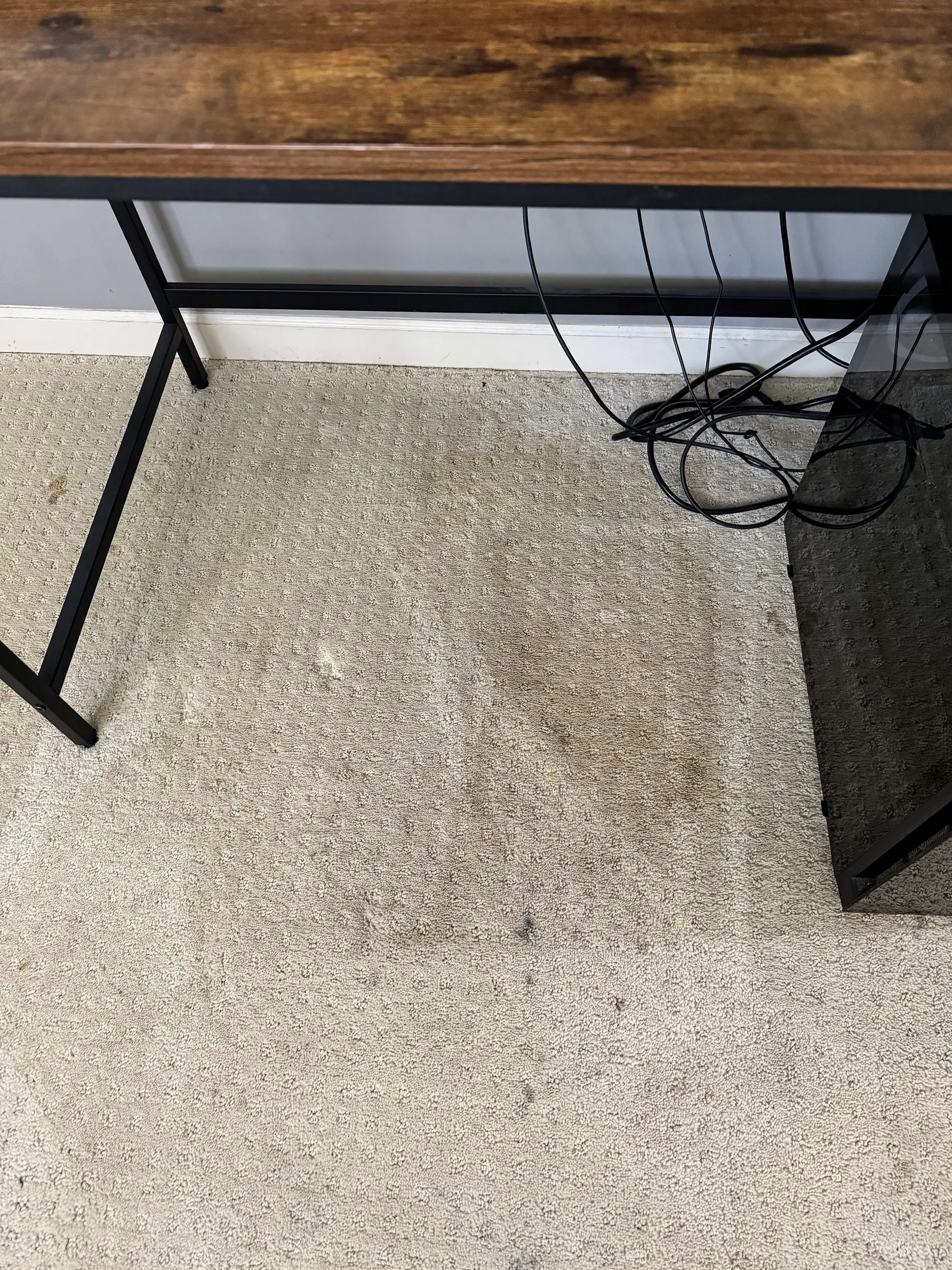
Why Repeated DIY Cleaning Can Make the Job Harder
One of the biggest mistakes is repeatedly applying different household products to the same spot. Vinegar, baking soda, soaps, fragranced sprays, and store-bought stain removers may change the odor temporarily, but they can also leave residues behind.
During later professional cleaning, those residues may create excessive foam, attract more soil, or interfere with rinsing. They can also make it harder to determine what is urine contamination and what is leftover product. For that reason, avoiding multiple DIY experiments usually gives the professional cleaner a clearer starting point.
The sooner the area is evaluated, the better the chance of reducing both the visible stain and the odor. A professional carpet cleaning service in Everett, WA can inspect the affected area, choose an appropriate process, and explain any limitations before treatment begins.
Can Carpet Pet Urine Treatment Remove the Odor Completely?
It depends on how deeply the urine reached the carpet, backing, padding, or subfloor. Earlier treatment usually improves the chance of a strong result, but complete odor removal cannot be guaranteed in every case.
Should I Use Vinegar or Baking Soda on Pet Urine?
They may temporarily reduce odor, but they usually do not remove all contamination and may leave residues that complicate later professional cleaning.
Why Does Pet Urine Odor Return After Cleaning?
Odor may return when contamination remains in the backing, pad, or subfloor and becomes noticeable again as moisture or humidity changes.
How Soon Should a Pet Urine Spot Be Treated?
As soon as practical. Fresh contamination is generally easier to evaluate and treat than urine that has dried, spread, or received repeated DIY products.
If you need carpet pet urine treatment in Everett, WA, Sparkly Clean WA can evaluate the affected area, explain the likely depth of contamination, and recommend a realistic cleaning approach based on the carpet’s condition.