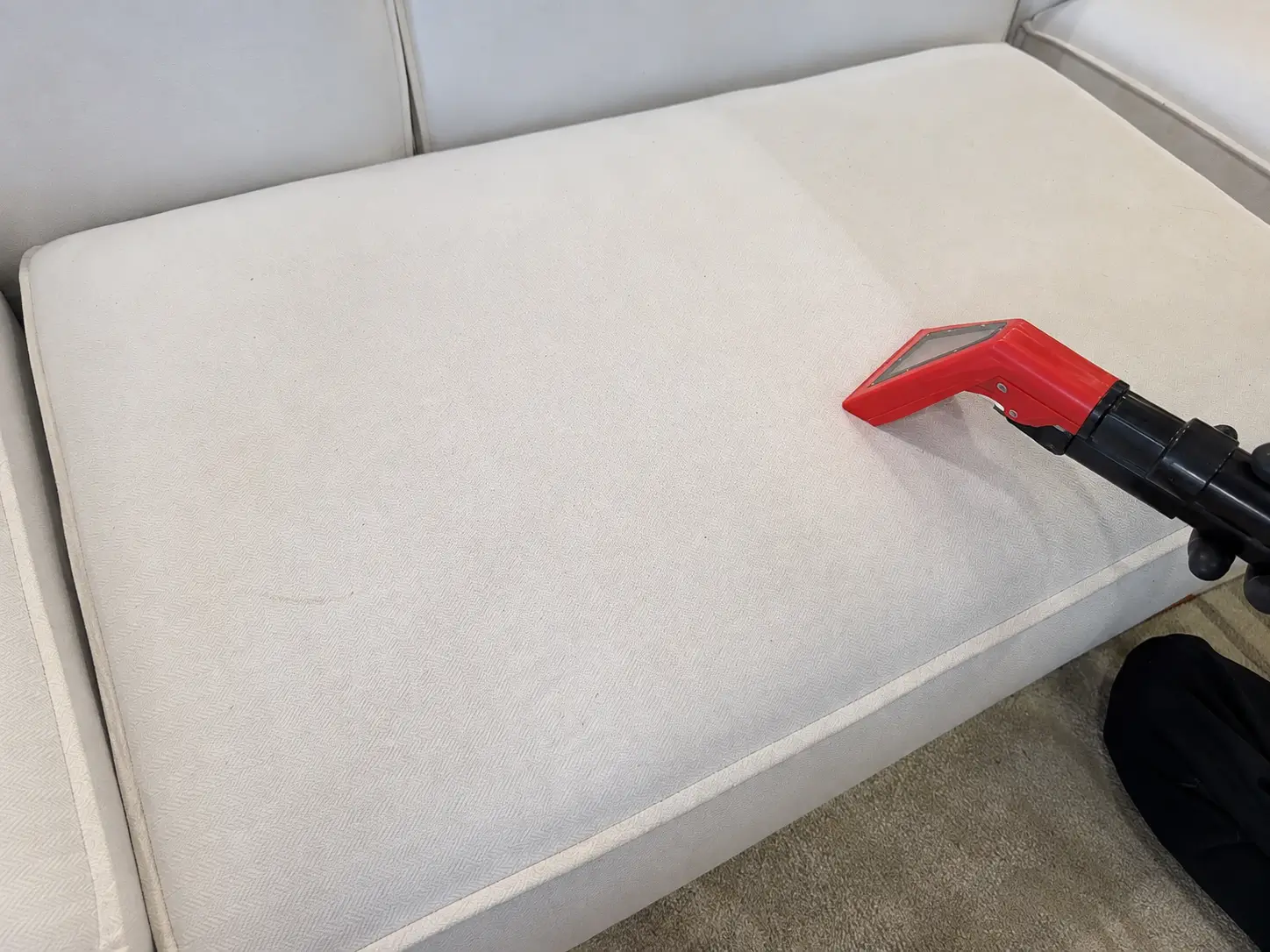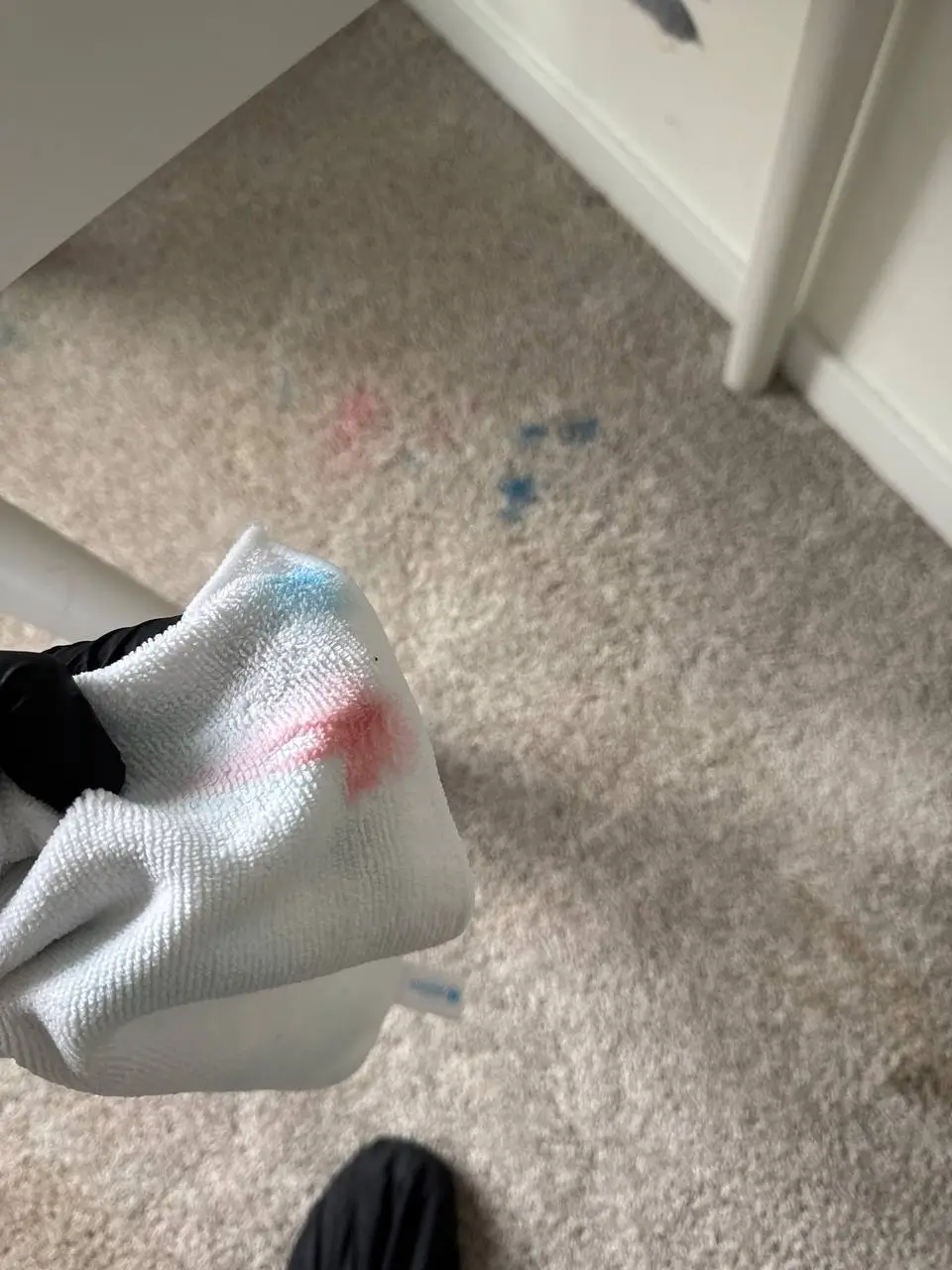
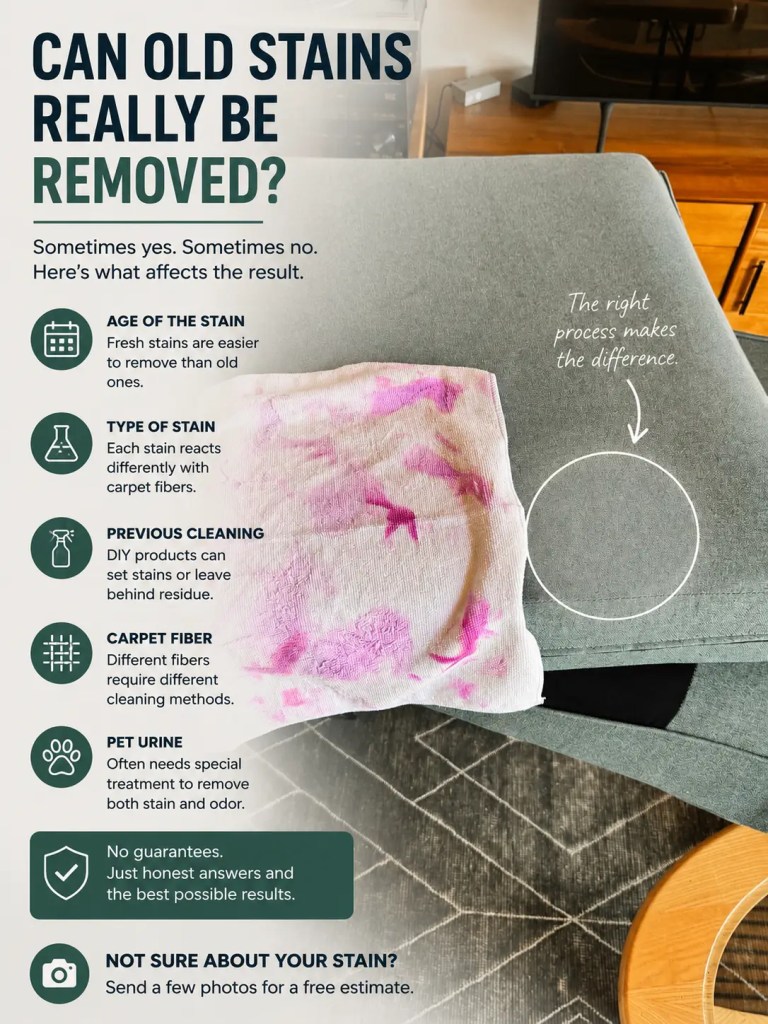
Old carpet stains are one of the most common concerns homeowners have before scheduling professional carpet cleaning. The honest answer is that many old carpet stains can improve significantly, but no cleaner can responsibly promise that every mark will disappear completely. The final result depends on what caused the discoloration, how long it has been present, the carpet fiber, and what has already been applied to the area.
Every stain has its own history. Some contamination sits mainly on the surface, while other substances penetrate deeper or permanently alter the carpet’s color. A realistic evaluation starts with understanding those differences rather than assuming every dark or discolored area will respond the same way.
Why Old Carpet Stains Do Not All Respond the Same Way
Coffee, wine, food spills, ink, makeup, grease, paint, and pet accidents can all behave differently when they contact carpet fibers. Some leave removable residue, while others may change the appearance of the fiber itself.
This is why the visible color of a spot does not tell the whole story. Two marks that look similar can require different treatment because the substance, age, carpet construction, and previous cleaning attempts may be completely different.
Professional cleaning should therefore begin with realistic expectations. The goal is to improve the affected area as much as possible without creating additional damage to the carpet.
Why the Age of Old Carpet Stains Matters
Fresh contamination is generally easier to address than a mark that has remained in the carpet for months or years. As time passes, some substances can work deeper into the fibers, and repeated foot traffic can spread residue beyond the original spot.
That does not mean an older stain is automatically permanent. It means the cleaner has less certainty before treatment begins. The longer a stain has been present, the more important it becomes to evaluate the carpet rather than promise a specific result in advance.
If you are deciding whether to try another home remedy first, our guide to professional carpet cleaning vs. a DIY rental machine explains why additional cleaning attempts are not always the best next step.
Previous Cleaning Attempts Can Affect Old Carpet Stains
Store-bought carpet cleaners and DIY stain removers can sometimes make later treatment more difficult. Some products may leave sticky residue behind, while others can affect the carpet fibers or change how the remaining stain responds to professional cleaning.
This is one reason it is useful to tell the cleaner what has already been used on the area. Even when the exact product is not known, mentioning previous attempts provides useful context before treatment starts.
Homeowners sometimes reach for common household products because they are readily available. Our article on hydrogen peroxide and organic stain removal explains why stain treatment should be approached carefully rather than assuming one product works safely on every carpet.
Carpet Fiber Changes the Cleaning Approach
Synthetic carpet and natural fibers such as wool do not necessarily respond the same way to cleaning products or stain treatments. The carpet material matters because the cleaning approach should be appropriate for the fiber and its current condition.
A method that is suitable for one carpet may not be the right choice for another. Protecting the carpet is just as important as improving the visible stain, so treatment should be selected with the material in mind rather than based only on the type of spill.
This is also why a responsible cleaner should avoid promising a perfect result before seeing the carpet. The visible mark is only one part of the evaluation.
Not Every Dark Spot Is an Old Carpet Stain
Some areas that look like stains may actually be heavy soil, body oils, or accumulated dirt. Those conditions can respond very differently from permanent discoloration and may improve well during professional hot water extraction.
On the other hand, cleaning cannot restore color that has already been permanently altered. Bleach, certain chemicals, and prolonged pet urine exposure can affect the carpet dye itself. When the color has changed rather than simply become soiled, removing residue does not necessarily return the original appearance.
A real carpet-cleaning example can provide useful context. Our article about carpet cleaning involving soup and paint stains in Lynnwood shows why different types of visible contamination need to be evaluated individually.
Pet Urine Requires More Than a Surface-Stain Evaluation
Pet urine deserves special attention because the visible mark may be only one part of the problem. Depending on how far the contamination has traveled, the carpet, pad, or even the material below may be affected.
Removing a visible stain and addressing odor are often two different processes. Standard carpet cleaning may improve the appearance, while deeper contamination can require additional treatment.
For more detail, see our guide to pet urine carpet removal, which explains why the depth of contamination matters when setting expectations.
What Results Should You Expect From Old Carpet Stains?
Professional carpet cleaning can dramatically improve many stains, but the most realistic answer is still: sometimes yes, sometimes no. The best possible result depends on the stain, the carpet, its age, previous treatments, and whether the carpet color itself has been permanently changed.
An honest company should explain those limitations before promising a result. The objective is to achieve the best improvement that is reasonably possible while protecting the carpet fibers throughout the process.
If you are in Everett, WA and are unsure whether an old stain can be improved, Sparkly Clean WA can review a few photos and provide a realistic opinion before you schedule carpet cleaning.
Frequently Asked Questions
Can old carpet stains always be removed?
No. Many stains can improve significantly, but some substances can permanently alter carpet color or fibers. The result depends on the stain type, age, carpet material, and previous cleaning attempts.
Do old carpet stains become harder to remove over time?
They can. Older contamination may penetrate deeper into the carpet fibers, and previous cleaning attempts can also affect how the area responds to professional treatment.
Can DIY stain removers make professional cleaning harder?
Sometimes. Certain products may leave residue, affect carpet fibers, or change how the stain responds. Tell the cleaner what has already been used whenever possible.
Why is pet urine different from a normal carpet stain?
Pet urine may affect more than the visible carpet surface. Depending on how deeply it penetrated, odor treatment may need to address contamination in the carpet, pad, or material below.