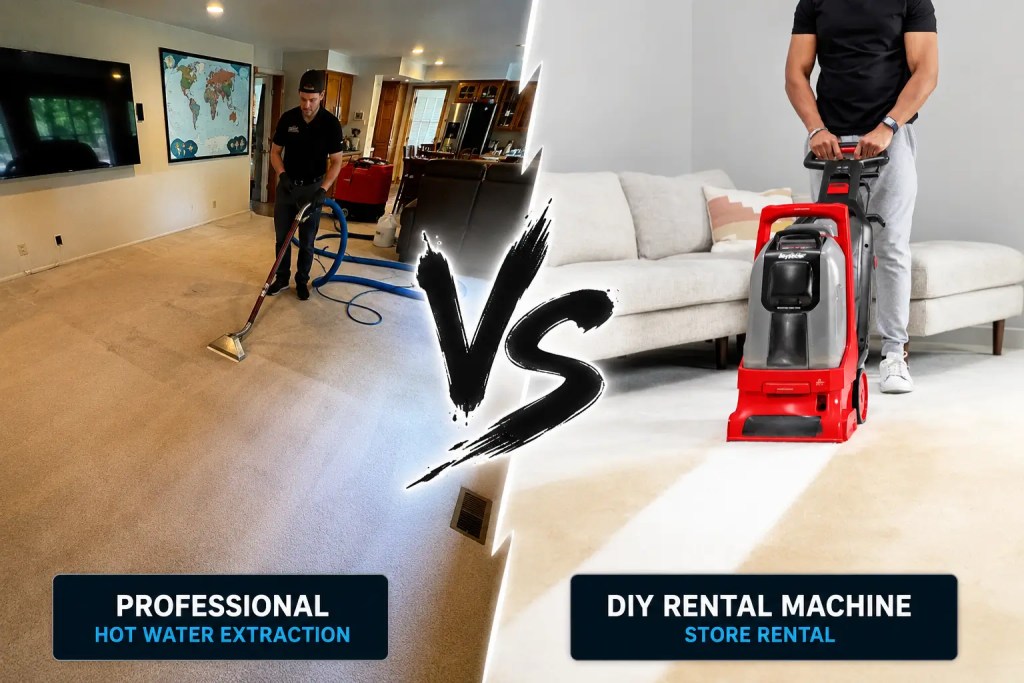
One of the most common questions I come across is: “Why hire a professional when I can rent a carpet cleaning machine from the grocery store for $40–$60?” It’s a fair question — and it deserves an honest answer. Professional carpet cleaning and DIY rental machines are not the same thing, and understanding the difference can save you from disappointing results, damaged carpet, or lingering odors. Here’s what actually separates the two.
Extraction Power: The Biggest Difference Nobody Talks About
Most homeowners assume the main difference between a rental machine and professional equipment is the cleaning solution. It isn’t. The real gap is vacuum power — specifically, how effectively the machine pulls water and soil back out of the carpet after cleaning.
Rental machines operate with significantly less suction than professional truck-mounted or portable extraction units. That gap has real consequences. More moisture stays in the carpet after cleaning, drying times stretch from hours into days, more embedded soil remains in the pile, and wicking becomes a problem — stains that seemed gone reappear as the carpet dries because contamination from deeper in the fibers gets pulled back to the surface.
Professional carpet cleaning equipment removes dramatically more water and contamination during the extraction pass. That’s not a marketing claim — it’s a mechanical reality based on the difference in motor size and suction capacity between consumer and commercial equipment.
Most of the Cleaning Happens Before the Machine Touches the Carpet
Many homeowners believe carpet cleaning starts when the wand makes contact with the carpet. In practice, the extraction step is closer to the end of the process — not the beginning. A thorough professional cleaning involves multiple steps before hot water extraction even begins.
My process includes a detailed inspection, HEPA dry vacuuming to remove loose soil, pre-treatment of the carpet, dwell time to allow solutions to break down contamination, mechanical agitation with a counter-rotating brush machine, targeted spot treatment, hot water extraction, and a post-cleaning inspection followed by managed drying.
Most DIY rental users spray and extract — skipping pre-treatment, agitation, and dwell time entirely. Those skipped steps matter. Pre-treatment and agitation are what loosen deeply embedded soil before extraction. Without them, the machine is essentially rinsing the surface rather than deep cleaning the fiber.
Pet Odors and Urine: Where Rental Machines Consistently Fall Short
If pet urine has soaked through the carpet face fiber into the backing or padding beneath, surface cleaning won’t solve the problem. In some cases it makes it temporarily worse — adding water reactivates dried urine crystals, which can intensify odor as the carpet dries.
Effective pet odor treatment requires UV inspection to locate contamination that isn’t visible to the naked eye, enzyme-based products that break down urine compounds at a molecular level, and application techniques designed to reach the same depth the urine originally penetrated. Rental machines aren’t equipped for any of that.
In my experience, pet urine problems are the single most common reason homeowners are disappointed after DIY carpet cleaning. The odor returns — sometimes stronger — because the source of the contamination was never actually addressed.
The Real Cost Comparison
At first glance, a $40–$60 rental looks like a significant saving over professional carpet cleaning. The comparison gets closer when you add up everything involved: the rental fee, cleaning solution, spot treatment products, fuel and travel time to pick up and return the machine, and several hours of physical labor.
By the time everything is included, the gap between DIY and professional carpet cleaning is smaller than most people expect going in. And that calculation doesn’t account for the risk of overwetting — one of the most common DIY mistakes.
When carpets become oversaturated, drying times extend significantly, musty odors can develop, wicking stains appear, and certain carpet types can be permanently damaged. Professional cleaning focuses on applying only the necessary amount of solution and extracting as much moisture as possible — minimizing drying time and the risk of secondary damage.
When to DIY and When to Call a Professional
Rental machines do have their place. For a small, fresh spill on a carpet that’s otherwise in good condition, a rental machine used promptly can be effective. If your carpets are maintained regularly and you’re dealing with light, general soiling, DIY cleaning may produce acceptable results.
Professional carpet cleaning makes significantly more sense when you’re dealing with heavy traffic areas, pet accidents or odors, significant staining, long-overdue maintenance, or allergy concerns. These are situations where extraction power, multi-step process, and specialized products make a measurable difference in the outcome.
Most carpets represent a substantial investment — often thousands of dollars to replace. Proper professional cleaning extends their life, protects that investment, and produces results that a rental machine genuinely cannot match when the job goes beyond basic surface refreshing. If you’re in Everett, Lynnwood, Mukilteo, Mill Creek, or anywhere in Snohomish or King County, request a free estimate and find out what professional carpet cleaning can do for your home.
Frequently Asked Questions
Can a rental carpet cleaning machine remove pet urine odor?
Usually not completely. If urine has soaked into the carpet backing or padding, surface cleaning reactivates odor-causing compounds without eliminating them. Professional treatment uses enzyme-based products and UV inspection to locate and treat contamination at the depth it actually reached — something rental machines aren’t designed to do.
How long does carpet take to dry after DIY cleaning vs professional cleaning?
DIY rental machines leave significantly more moisture in the carpet due to lower suction power — drying can take 24 to 48 hours or longer. Professional equipment extracts far more water, typically reducing drying time to 4 to 8 hours with good airflow. Faster drying also reduces the risk of musty odors and wicking.
Why do carpet stains come back after I clean them myself?
This is called wicking. When a carpet isn’t fully extracted, soil and contaminants from deeper in the fiber migrate upward as the carpet dries — reappearing on the surface as stains. It’s caused by insufficient suction during extraction, which leaves too much moisture and contamination behind in the pile and backing.
How often should carpets be professionally cleaned?
Most carpets benefit from professional cleaning once every 12 to 18 months. High-traffic areas, homes with pets or children, and households with allergy sufferers typically need cleaning more frequently — every 6 to 12 months. Regular professional maintenance extends carpet life and keeps indoor air quality higher between cleanings.