Marker stains on couch upholstery can often be removed, but the sooner you act, the better the results. Ink from markers continues to penetrate deeper into the fabric over time, making complete stain removal more challenging. While many couches can be restored successfully, the outcome depends on the type of marker, the upholstery fabric, and how long the stain has been present.
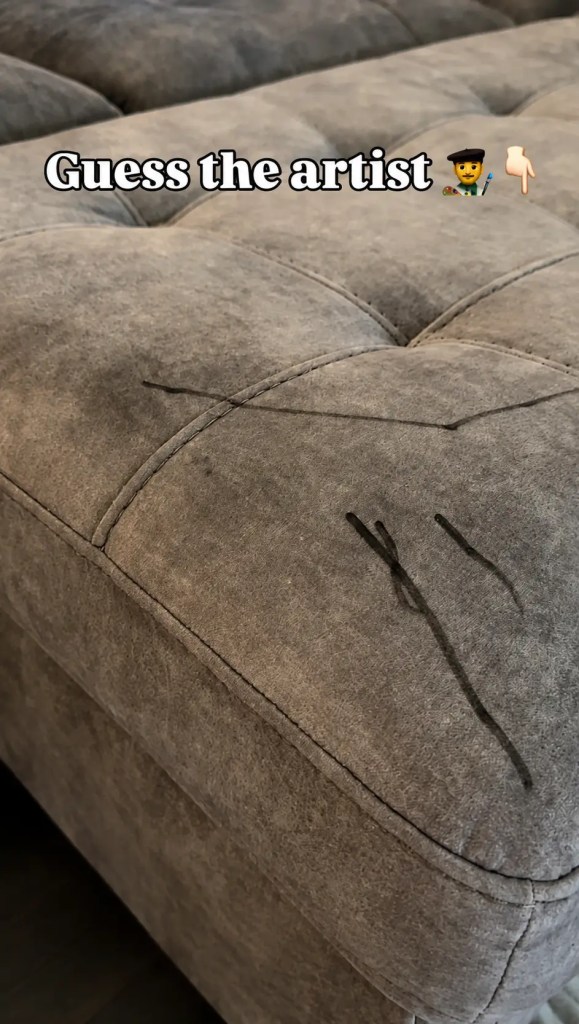
Recently, I visited one of my regular clients for what turned out to be their second upholstery cleaning appointment in just two months. This time, their young son had transformed the couch into his own canvas, covering several cushions and seating areas with colorful marker drawings. If you have children at home, you’re probably familiar with how quickly these accidents can happen.
Can Marker Stains Be Removed from a Couch?
In many cases, yes. Marker stains can often be removed successfully with the proper cleaning process, especially when they are treated soon after they appear. Permanent results are never guaranteed because every stain behaves differently, but early treatment gives the highest chance of complete removal.
- Act as quickly as possible after discovering the stain.
- Avoid rubbing the ink deeper into the fabric.
- Do not experiment with multiple household cleaners.
- Professional extraction helps remove both ink and cleaning residues.
Many homeowners assume that all markers are the same, but that’s rarely true. Some markers use water-based dyes that respond well to professional cleaning, while others contain alcohol, oils, or permanent pigments designed specifically to resist moisture. Each type requires a different approach.
The upholstery fabric itself also plays a major role. Microfiber, polyester, cotton blends, linen, velvet, and other materials all react differently to stain removal products. Choosing the wrong cleaner may not only fail to remove the ink but could also damage the fabric or cause discoloration.
Why Waiting Makes Marker Stains Harder to Remove
One of the biggest mistakes I regularly notice is that people wait several days—or even weeks—before seeking help. Unfortunately, time works against successful stain removal.
Fresh ink usually remains closer to the surface of the fibers. As it dries, pigments migrate deeper into the upholstery, where they become increasingly difficult to dissolve and extract. Heat, sunlight, and repeated sitting on the furniture can accelerate this process by forcing the dye further into the fabric.
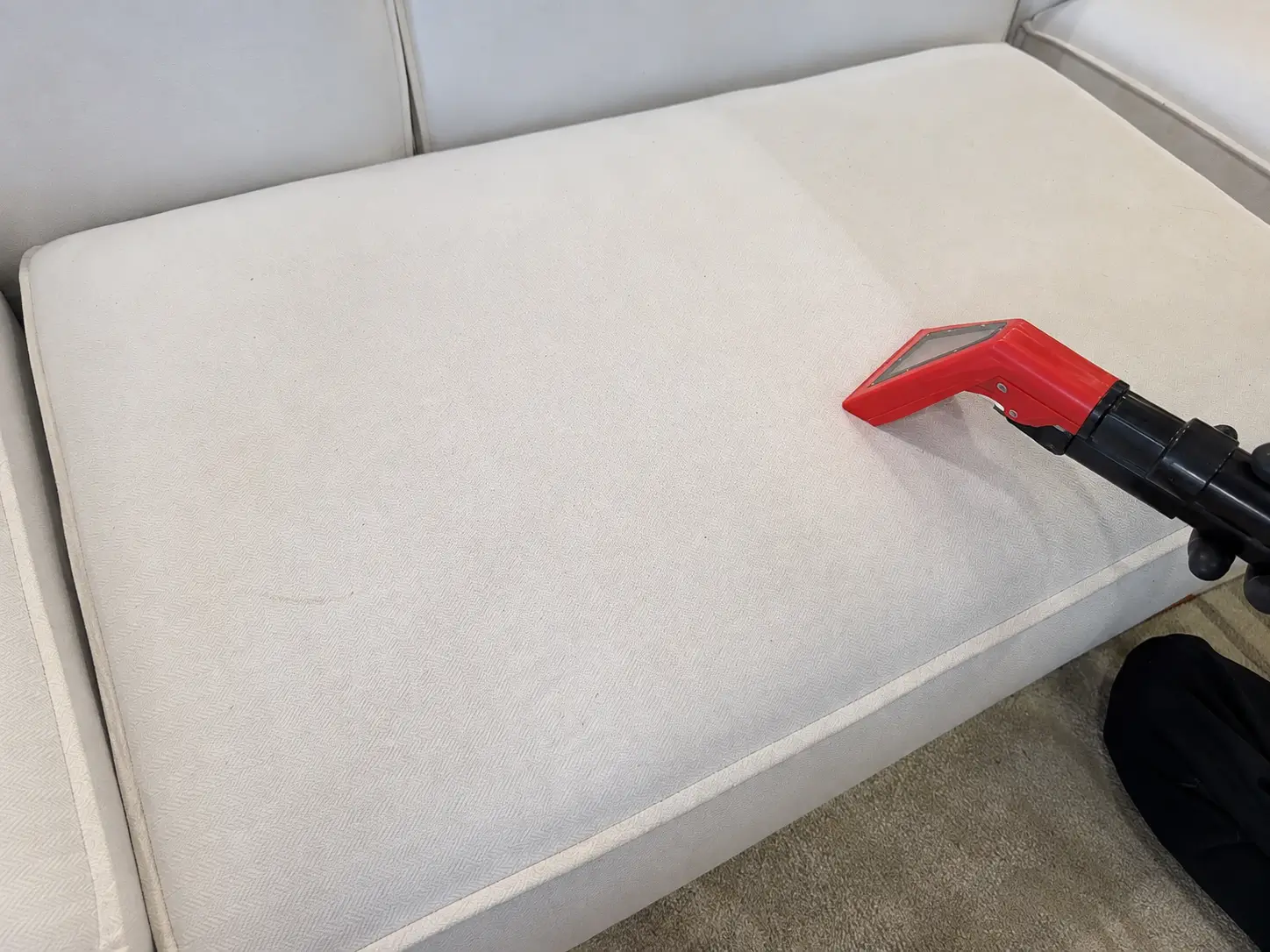
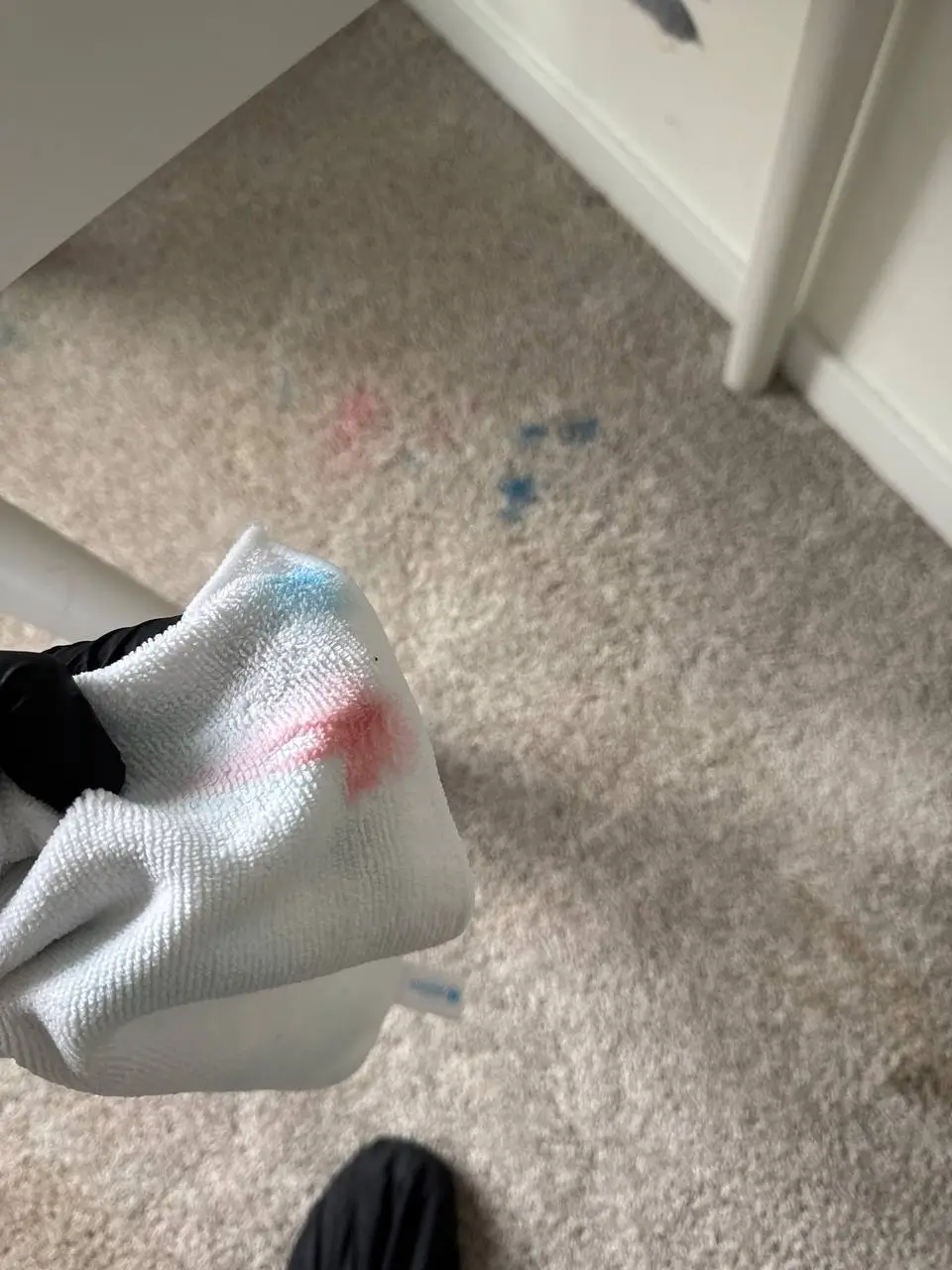
In the cleaning project that inspired this article, several days had already passed before I arrived. Fortunately, the stains had not permanently bonded to the upholstery fibers, and after careful treatment and extraction, every visible marker stain was successfully removed. The before-and-after photos showed a dramatic improvement.
Many homeowners are surprised that stain removal isn’t simply about applying a stronger chemical. Professional upholstery cleaning relies on selecting products that are compatible with both the stain and the fabric, followed by thorough rinsing and extraction to remove loosened ink from deep within the upholstery.
Why Household Stain Removal Methods Often Fall Short
The internet is filled with homemade stain removal recipes using rubbing alcohol, vinegar, baking soda, dish soap, hairspray, and dozens of other products. While some methods may help in certain situations, there is no universal solution that works safely on every couch.
Different cleaning products interact differently with various upholstery fibers. Some solvents can spread the stain rather than remove it. Others may leave sticky residues that attract soil after the couch dries, causing the cleaned area to become dirty again much faster.
Another common issue is overwetting. Excess moisture can carry dissolved ink deeper into the cushion instead of extracting it. It may also increase drying time and create conditions that are less than ideal for upholstered furniture.
Professional upholstery cleaning equipment addresses these problems differently. Instead of simply applying chemicals, the cleaning process combines appropriate stain treatment with controlled rinsing and powerful extraction. This helps remove both the dissolved marker pigments and any remaining cleaning solution rather than leaving them behind inside the fabric.
Proper extraction also reduces residue, improves drying, and minimizes the chance of stains reappearing as moisture evaporates.
When Professional Upholstery Cleaning Is the Best Option
Professional upholstery cleaning is often the safest choice when marker stains cover a large area, involve delicate fabrics, or have been sitting for several days. The longer ink remains in the upholstery, the more important it becomes to use the correct cleaning method instead of experimenting with household products.
A professional cleaning process begins with identifying the upholstery fabric and evaluating the type of stain. This allows the appropriate cleaning agents and techniques to be selected while minimizing the risk of damaging the material.
After stain treatment, the affected area is thoroughly rinsed and extracted using professional equipment. This step is essential because successful stain removal is not just about loosening the ink—it is about physically removing both the dissolved pigments and the cleaning solution from the fabric.
Every couch is different, and every marker leaves behind a unique combination of dyes and solvents. While no cleaning company can honestly promise 100% removal in every situation, professional treatment often achieves results that are difficult or impossible to duplicate with consumer products.
The project described in this article is a good example. Although several days had passed before cleaning, the upholstery responded well to treatment, and every visible marker stain was successfully removed. Situations like this demonstrate why acting quickly can make such a significant difference.
If your couch, sectional, loveseat, or upholstered chair has been marked with washable markers, permanent markers, pen ink, or other dyes, don’t assume the furniture is permanently ruined. In many cases, prompt professional upholstery cleaning can restore the appearance of the fabric and help prevent permanent staining.
Can permanent marker be removed from a couch?
Sometimes. Permanent marker is more difficult to remove than washable ink, but professional upholstery cleaning can often significantly reduce or completely remove the stain depending on the fabric and how long the ink has been present.
Should I try to clean marker stains myself?
Blotting fresh ink gently is usually safe, but avoid scrubbing or applying multiple household cleaners. Using the wrong product may spread the stain or damage the upholstery fabric.
How quickly should marker stains be treated?
Immediately whenever possible. Fresh stains remain closer to the surface of the fabric and generally respond much better to professional stain removal than stains that have been left for several days or longer.
Can professional upholstery cleaning damage my couch?
Professional cleaning should always begin with fabric identification and appropriate cleaning methods. Using products and techniques that match the upholstery helps clean safely while reducing the risk of discoloration or fabric damage.
Marker stains don’t always mean your furniture needs to be replaced. The sooner they’re treated, the better the chances of complete removal. If your upholstered furniture has been stained with markers, pen ink, or other dyes, professional upholstery cleaning may restore its appearance and help extend its life. Contact Sparkly Clean WA to request a free estimate or learn more about our upholstery cleaning services.