The best way to remove coffee stains from carpet is to act immediately: blot up as much liquid as possible, avoid scrubbing, and treat the remaining discoloration carefully. Fast blotting often does most of the work. Aggressive rubbing and heavy use of store-bought cleaners can spread the spill, leave residue, and make later professional cleaning more difficult.
How to Remove Coffee Stains Immediately
Start with several clean paper towels. Place them over the affected area and press firmly so the towels absorb the coffee from the carpet. Replace them as they become wet, then continue until little or no moisture transfers.
Do not rub the stain. Scrubbing can move the coffee outward and push it deeper into the fibers. Patient blotting is safer because it lifts liquid vertically instead of spreading it across a wider area.
When the spill is treated quickly, blotting alone may remove 80–90% of the coffee. That means most of the cleaning can be completed before any solution touches the carpet. This simple step also reduces the amount of residue and moisture that must be removed later.
Why Store-Bought Cleaners Can Make the Stain Worse
Many homeowners immediately reach for a general carpet spray, but using several products can create a second problem. Some formulas produce excessive foam or leave detergent behind. That residue can remain in the fibers and interfere with rinsing during future professional carpet cleaning.
After blotting, avoid layering different household products or scrubbing aggressively. More cleaner does not necessarily mean better stain removal. The goal is to remove the coffee while keeping the carpet fibers and dyes as stable as possible.
- Do not scrub the affected area.
- Do not soak the carpet with multiple cleaners.
- Do not combine several treatments at once.
- Do not assume every carpet fiber will react the same way.

How to Remove Coffee Stains with 3% Hydrogen Peroxide
After you have removed as much liquid as possible, apply 3% hydrogen peroxide evenly over the stained area. Extend the application about two to three inches beyond the visible edge so the treatment covers any coffee that may have spread beyond the darkest part of the mark.
Cover the treated area with plastic wrap. This slows evaporation and allows the hydrogen peroxide to remain active longer on the remaining discoloration. Leave it covered until the area has dried completely, then decide whether another application is needed.
If a slight mark remains, repeat the same controlled treatment rather than scrubbing. Each application may continue to improve the appearance. The related guide to hydrogen peroxide for organic stain removal explains why careful testing and realistic expectations matter.
When You Should Not Use Hydrogen Peroxide
Always test 3% hydrogen peroxide on a small, hidden area first. Many synthetic carpets tolerate it well, but some natural fibers and certain dyes can react differently. A hidden test helps reveal possible lightening or color change before you treat a visible section.
Use extra caution when the carpet material is unknown, the color is unstable, or the area has already been treated with another product. Previous cleaning attempts can affect the safest next step. If the test area changes color, stop and contact a professional rather than continuing.
Before repeating the treatment, wait until the area is fully dry. The guide on how long carpet takes to dry provides useful context when deciding whether the carpet is ready for another careful application.
When Professionals Should Remove Coffee Stains
DIY treatment may not fully remove coffee that contains milk, cream, sugar, or flavored syrup. These ingredients can leave residues beyond the visible brown discoloration. Older stains and repeated cleaning attempts can also make the result less predictable.
If the appearance is still unsatisfactory after a couple of careful attempts, professional equipment can rinse the carpet more thoroughly and remove remaining residues. During inspection, the carpet fiber, stain type, age of the spill, and previous cleaning attempts should all be considered before selecting a method.
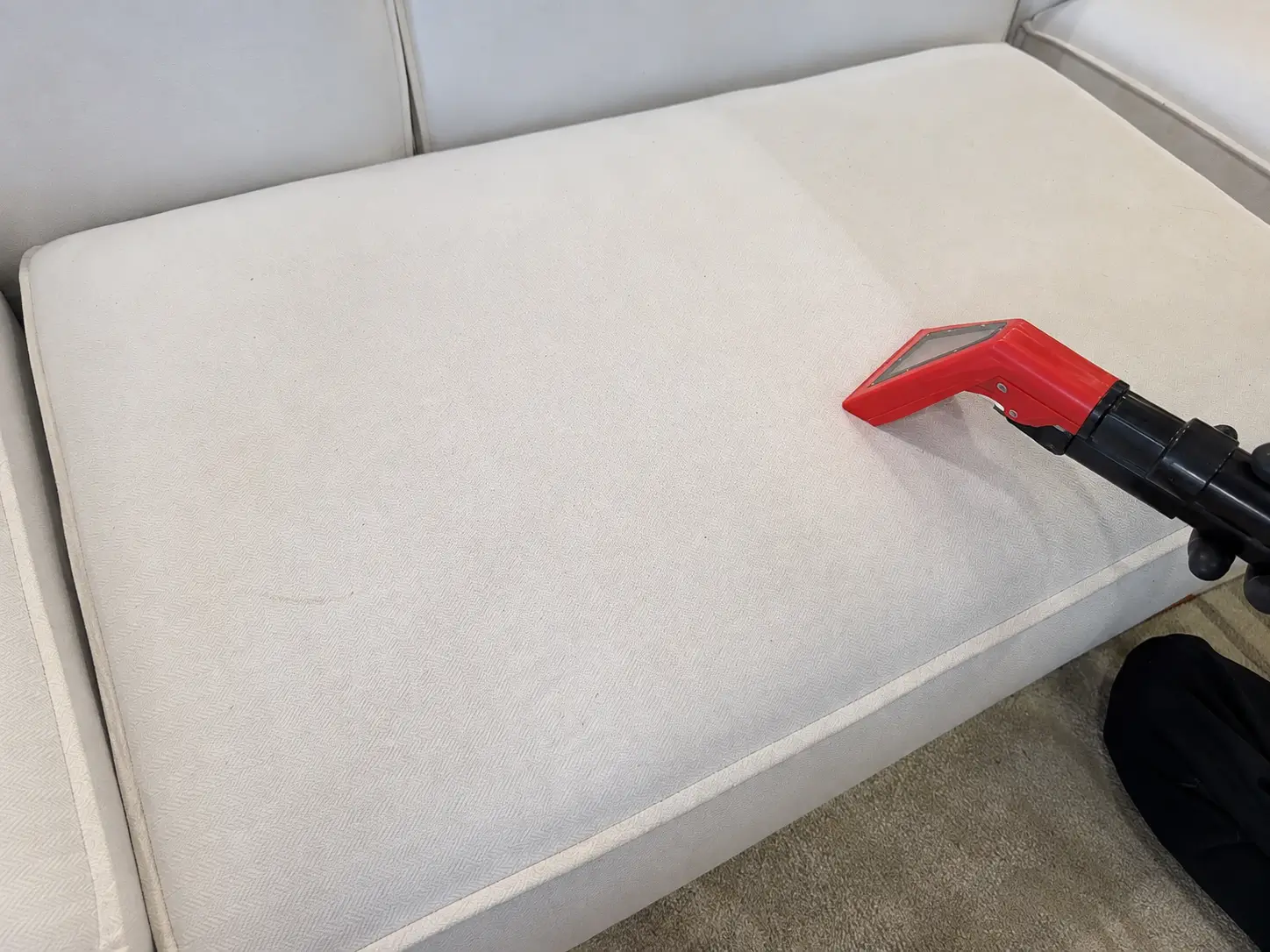
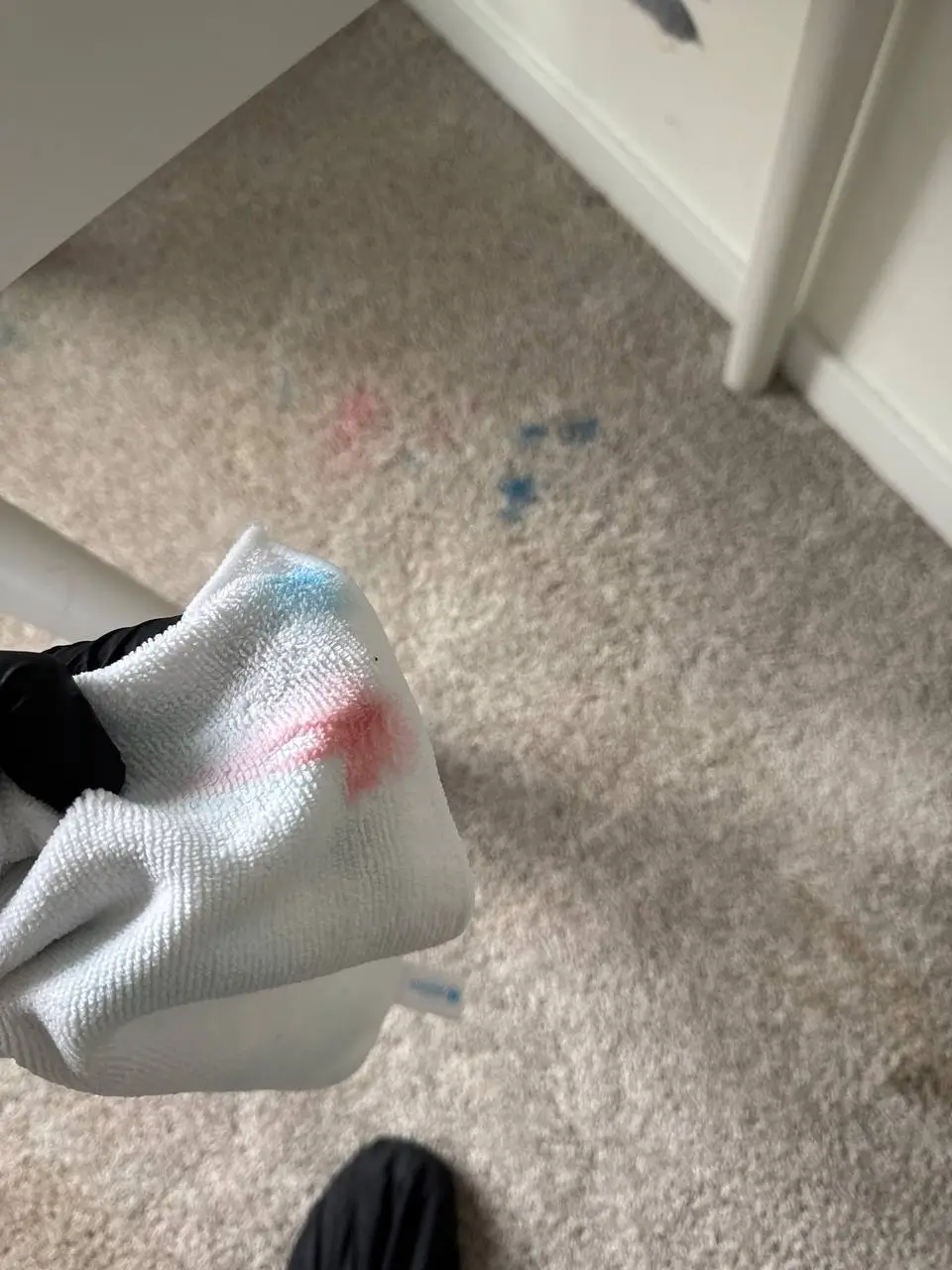
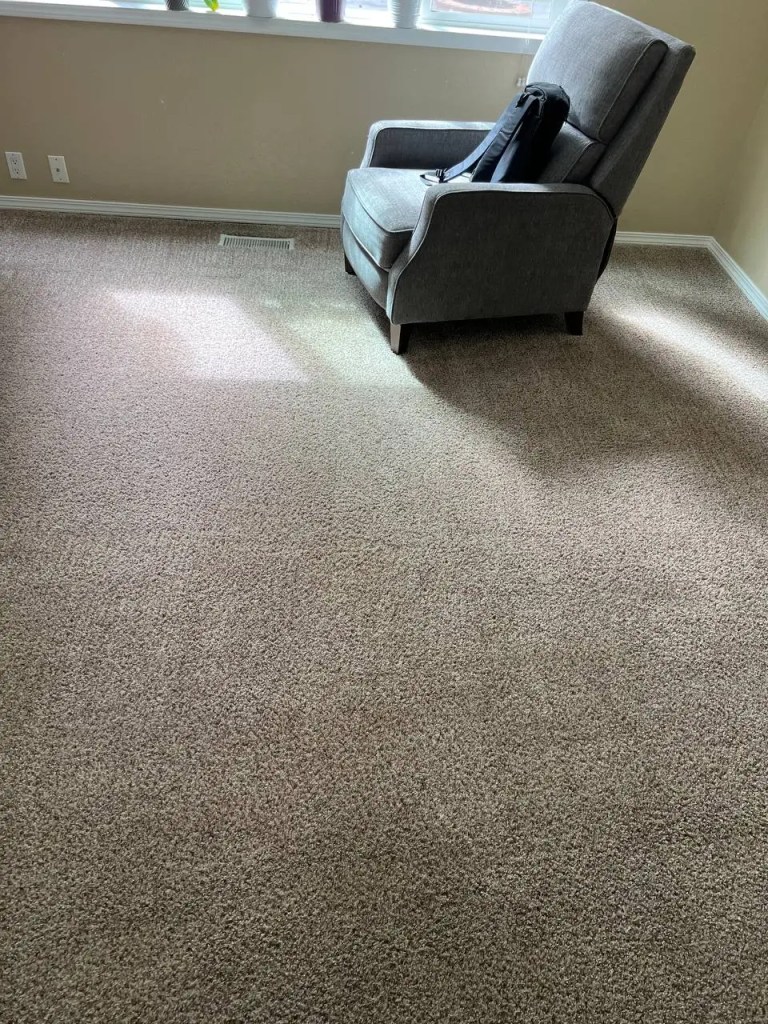
For homeowners in Everett, WA, Sparkly Clean also documents a completed carpet cleaning job from the local service area. No method can guarantee complete removal, but proper inspection gives the carpet the best realistic chance of improvement without unnecessary damage.
Frequently Asked Questions
Should I scrub a fresh coffee stain?
No. Scrubbing can spread the coffee and push it deeper into the carpet. Blot firmly with clean paper towels and replace them until moisture stops transferring.
Can 3% hydrogen peroxide remove coffee stains?
It may significantly improve remaining discoloration on many synthetic carpets. Always test a hidden area first because some fibers and dyes may lighten or change color.
How far beyond the stain should I spray?
Apply the solution about two to three inches beyond the visible edge to cover coffee that may have spread outside the darkest area.
Can I repeat the treatment?
Yes, if the hidden test showed no adverse reaction. Let the area dry completely, then repeat the same controlled process instead of scrubbing or using a stronger solution.
When should I call a carpet cleaner?
Call a professional if the stain remains after a couple of attempts, the carpet material is uncertain, or the spill contains milk, cream, sugar, or syrup.
If you need help deciding whether to continue DIY treatment or schedule professional Carpet Cleaning in Everett, WA, Sparkly Clean can inspect the affected area and recommend a realistic approach based on the carpet fiber, stain condition, and previous cleaning attempts.