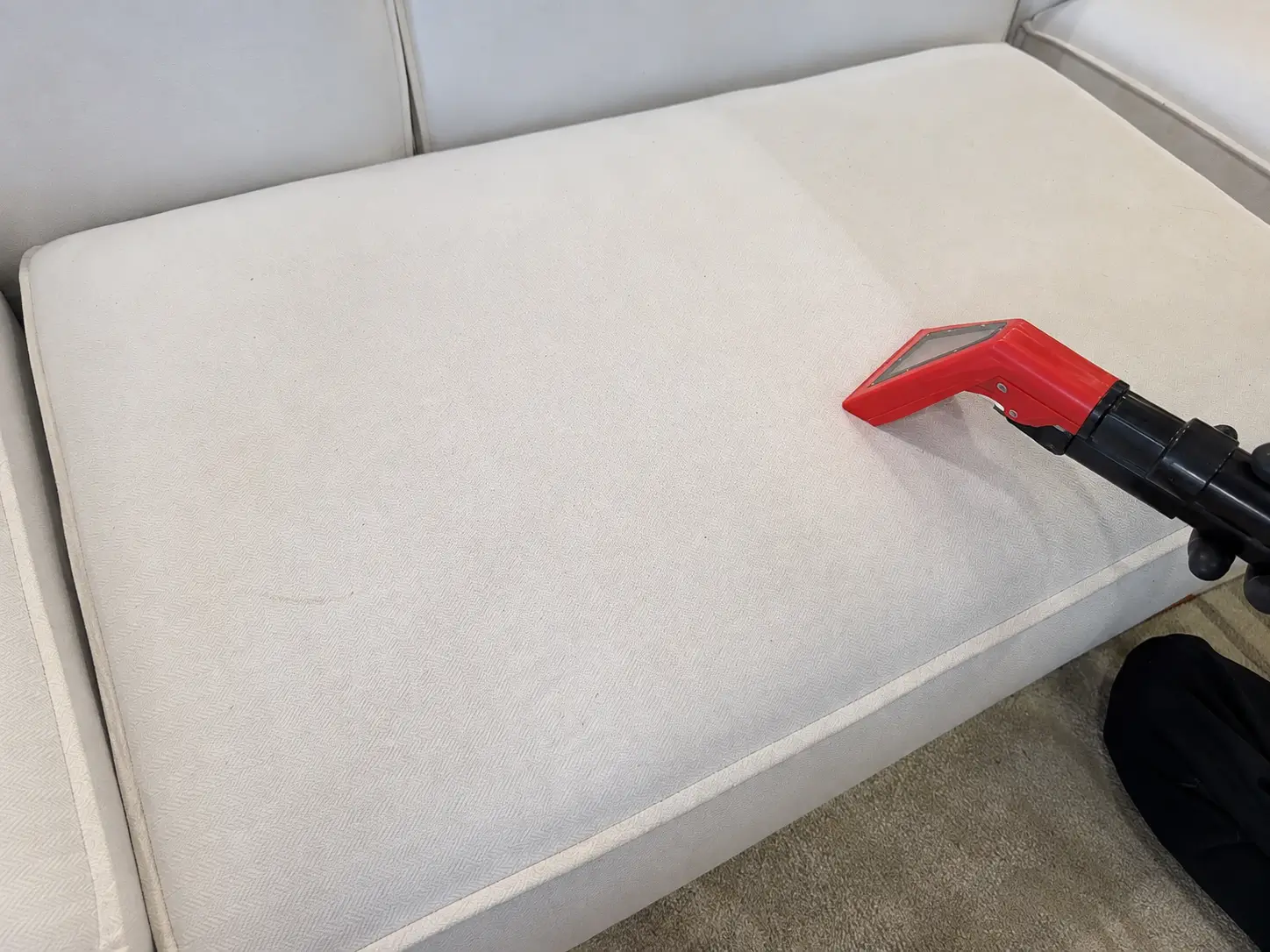
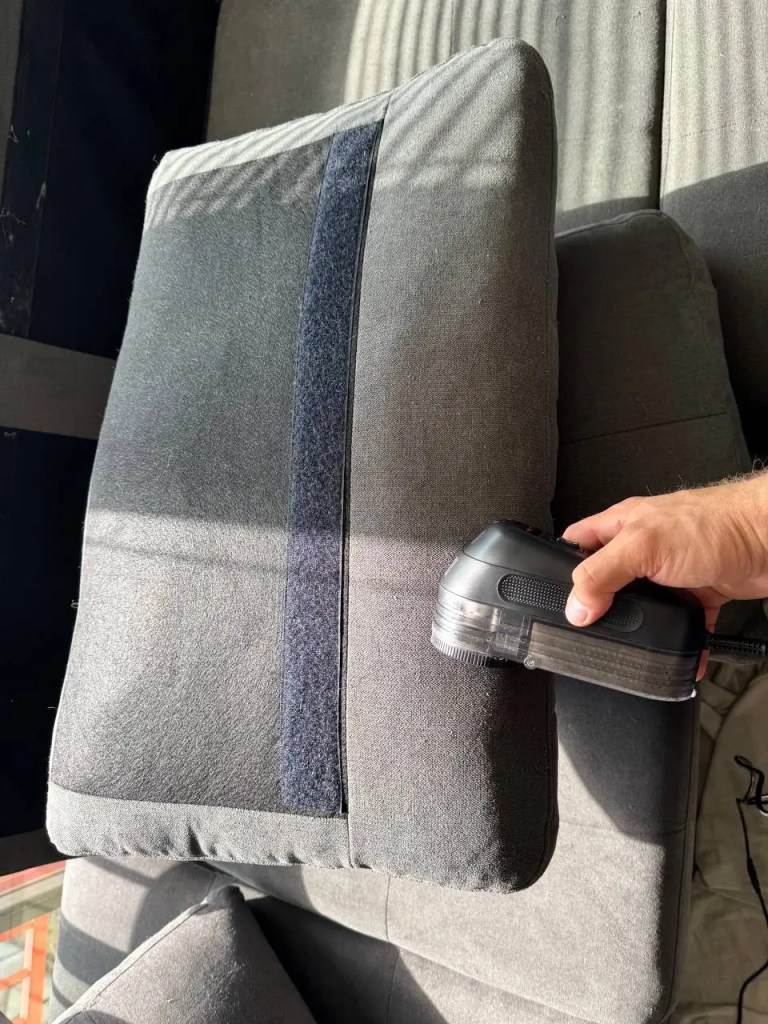
Fabric lint removal is an excellent way to improve the appearance of upholstered furniture by removing lint, loose fibers, fuzz, and small fabric snags. While this service is not included in our standard upholstery cleaning, it can be added as an extra service for fabric sofas and chairs that need additional attention.
Many homeowners notice that even after a thorough upholstery cleaning, their sofa still doesn’t look as fresh as expected. In many cases, the problem isn’t dirt at all. Instead, the fabric surface has accumulated lint, loose fibers, pet hair, or small pulled threads that make the upholstery appear older and more worn than it actually is.
What Is Fabric Lint Removal?
Fabric lint removal is the process of carefully removing surface fuzz, pilling, loose fibers, and minor fabric snags using specialized fabric shavers or lint removal tools. Unlike upholstery cleaning, which removes embedded soil and stains, this service focuses on improving the appearance of the fabric itself.
It works especially well on woven upholstery fabrics that naturally collect lint through everyday use. Homes with pets—particularly cats—often develop small pulled threads where claws catch the fabric. Although these snags are usually cosmetic, removing or trimming them carefully can make the furniture look noticeably cleaner and more uniform.
This service is designed to enhance the final appearance of the upholstery rather than replace professional cleaning. Many clients choose to add it after a deep upholstery cleaning for the best overall result.
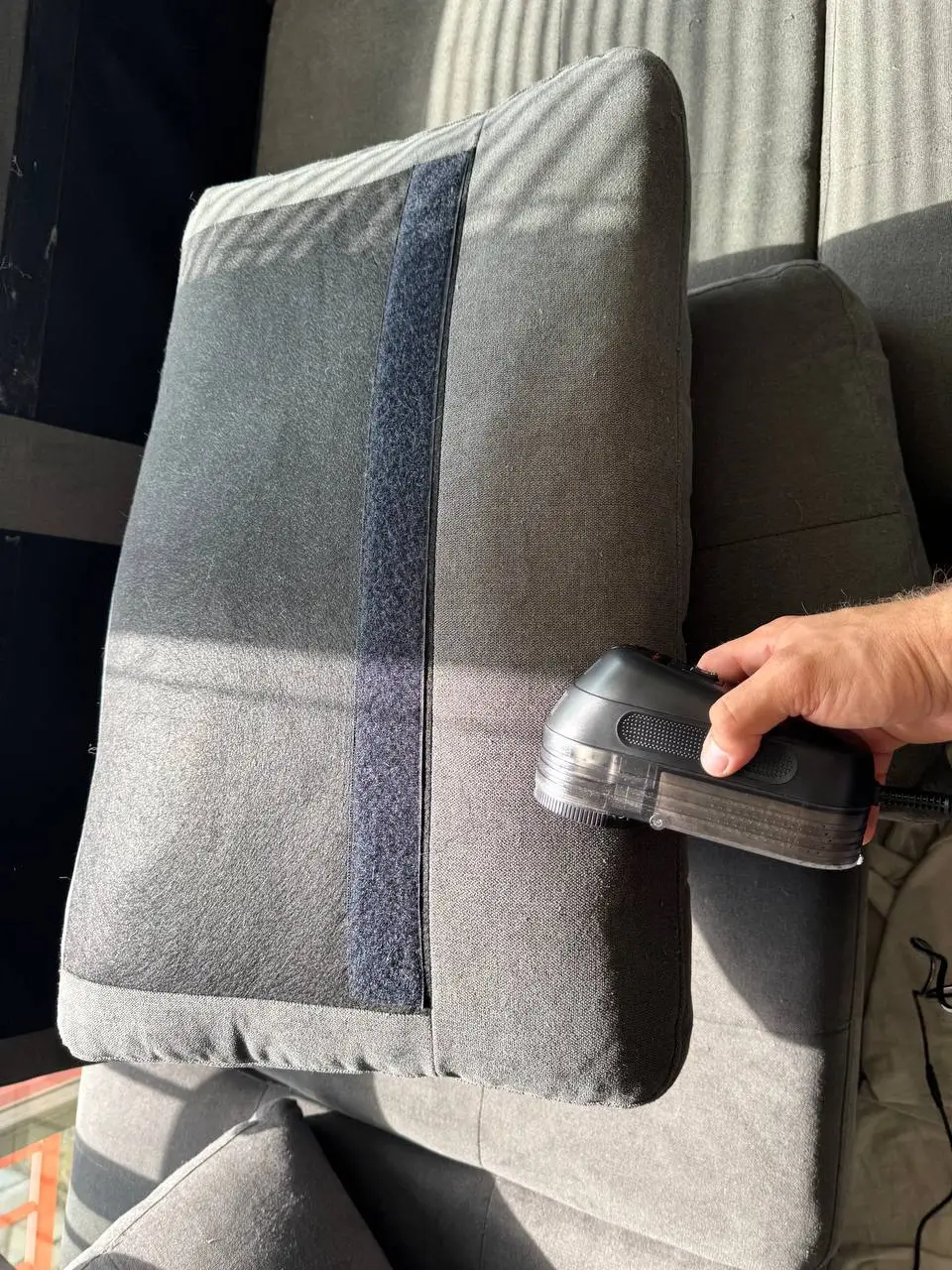

Can You Remove Cat Snags from Upholstery?
In many situations, yes. Small snags caused by cats can often be trimmed or reduced so they become far less noticeable. However, every fabric responds differently, and not every snag can be completely eliminated.
The goal is to improve the appearance without damaging the upholstery. Delicate fabrics, heavily woven materials, or large pulled loops require extra care. Aggressive trimming or shaving can create additional damage, which is why every fabric should be evaluated before any work begins.
In my experience, many homeowners are surprised by how much of a visual difference removing surface fuzz and loose fibers can make. Even when the upholstery is already clean, the furniture often looks newer simply because the fabric surface appears smoother and more even.

Can You Do Fabric Lint Removal Yourself?
Yes. Fabric shavers and lint removal tools are widely available online and in many local stores, including Amazon. If you decide to do it yourself, patience is much more important than speed.
- Always test the tool on a hidden area first.
- Use very light pressure.
- Work slowly across the fabric.
- Avoid pressing down aggressively.
- Never rush the process.
Too much pressure can damage upholstery fibers, create new snags, or leave the fabric looking uneven. Some upholstery materials are more delicate than others, so what works well on one sofa may not be appropriate for another.
If you’re unsure how your upholstery fabric will respond, it’s usually safer to leave the work to a professional. Proper technique helps preserve the fabric while improving its appearance.
When Professional Fabric Lint Removal Makes Sense
Professional fabric lint removal is a great option when your furniture has accumulated years of lint, fuzz, pet hair, or minor cat damage that standard vacuuming cannot remove. It pairs especially well with deep upholstery cleaning because both services complement each other.
Deep cleaning removes embedded soil, body oils, allergens, and stains, while lint removal improves the texture and visual appearance of the upholstery surface. Together, they help restore furniture that may otherwise look older than it really is.
Although this service cannot repair torn fabric or severe claw damage, it often provides a noticeable cosmetic improvement for well-maintained furniture with normal wear.
Is fabric lint removal included with upholstery cleaning?
No. It is offered as an optional add-on service because not every piece of furniture requires it.
Can a fabric shaver damage my couch?
Yes, if used incorrectly. Excessive pressure or aggressive movements can damage upholstery fibers or create additional snags.
Will fabric lint removal repair cat damage?
It can improve the appearance of small snags and loose fibers, but it cannot repair torn fabric or extensive claw damage.
Should lint removal be done before or after upholstery cleaning?
For most situations, it works best after professional upholstery cleaning, when the fabric is already clean and dry.
If your sofa looks dull because of lint, fuzz, loose fibers, or minor cat snags, Sparkly Clean WA can help. Fabric lint removal is available as an optional add-on service to complement professional upholstery cleaning and give your furniture a cleaner, more refreshed appearance.